Begin with the case reason and requested evidence. Build a timeline from the payment through fulfillment, delivery, support, return, or refund. Attach only records that establish the facts relevant to that reason. PalSync’s evidence model is intended to keep source records connected and show what is missing before a response is prepared.
Evidence-readiness checklist
- 01
Read the request
Capture the case type, reason, deadline, and evidence PayPal or the issuer requests.
- 02
Build the timeline
Order the payment, fulfillment, delivery, customer contact, and resolution events.
- 03
Validate source consistency
Check identifiers, dates, amounts, addresses, product descriptions, and shipment records for contradictions.
- 04
Select the smallest sufficient set
Use the records that directly support the response instead of an unstructured document dump.
- 05
Approve and archive
Record who reviewed the package, what was submitted, when it was submitted, and the eventual outcome.
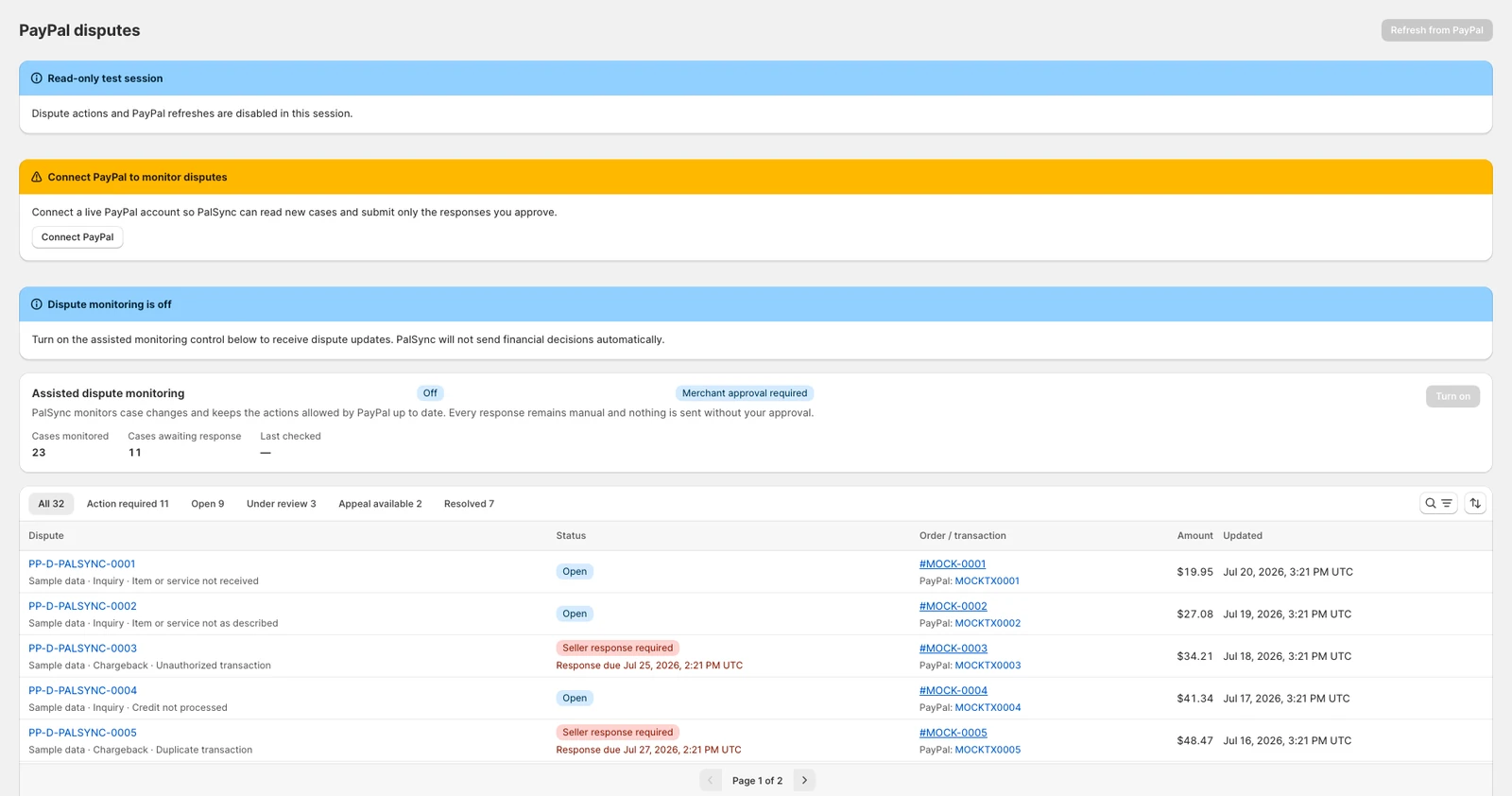
Minimum source groups
- PayPal transaction details
- Commerce order and item details
- Proof of shipment or delivery when relevant
- Customer messages and support history
- Refund, cancellation, return, or replacement evidence
Questions merchants ask next
Is proof of shipment the same as proof of delivery?
No. Shipment evidence shows that an item entered the carrier network; delivery evidence shows a delivery event and may include additional destination or recipient context. Use the evidence the case requests.
Are screenshots enough?
A screenshot can provide context, but source records with traceable identifiers, dates, and statuses are easier to validate. Preserve the underlying transaction, order, carrier, and support records whenever possible.
Should a seller submit every available document?
Not automatically. A focused package that answers the case reason is easier to review than an unstructured document dump. Retain everything internally, then submit the smallest sufficient evidence set.
Official sources
These sources support policy and technical statements.
Merchant-language research
These discussions identify questions and operational pain; they are not policy authority.