Confirm whether the case is a PayPal claim or an external card-issuer chargeback and record the deadline. Match the payment to the commerce order, then collect the transaction, checkout, account, shipment, delivery, and customer-interaction facts relevant to the request. Avoid inferring buyer intent; report only source-supported facts.
Respond without inferring intent
- 01
Identify the decision path
Confirm PayPal claim versus external chargeback and note the allowed response.
- 02
Match transaction and order
Connect payment identifiers, amount, buyer, checkout, and commerce order.
- 03
Assemble relevant signals
Retain account, checkout, device, shipment, delivery, and prior-customer facts that are lawfully available.
- 04
Remove unsupported conclusions
Do not claim who made the purchase unless the source record supports it.
- 05
Review and submit
Have an authorized merchant approve the evidence and preserve the exact submitted package.
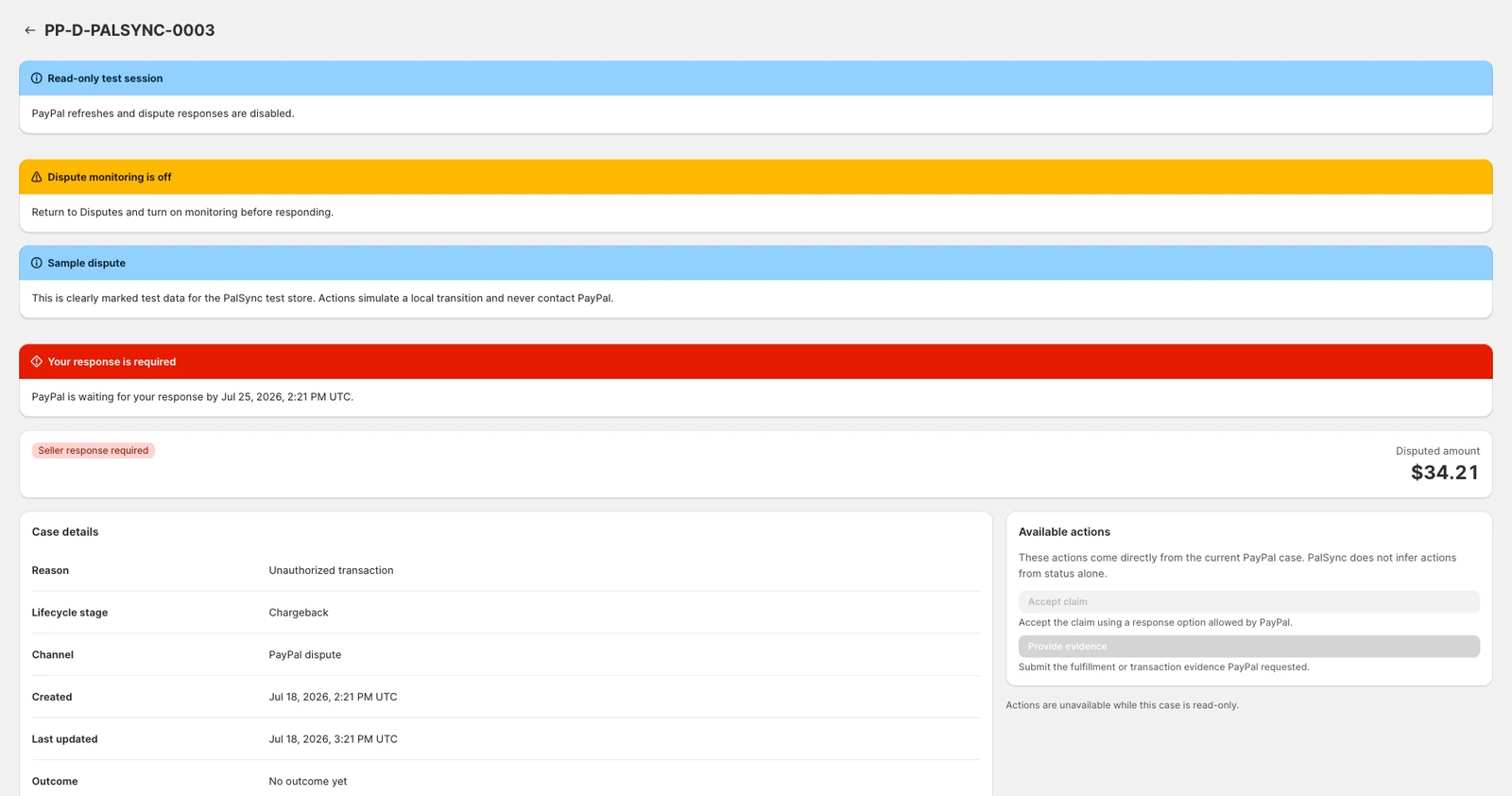
Unauthorized-transaction record
- Case path, reason, and deadline
- PayPal transaction and commerce order
- Checkout and account records lawfully retained
- Shipment and delivery facts when relevant
- Prior customer relationship and communication when relevant
Questions merchants ask next
Does delivery prove authorization?
Not necessarily. Delivery can be relevant evidence, but the case reason concerns authorization and the decision-maker defines what is considered.
Can I call the buyer fraudulent in the response?
Avoid unsupported characterizations. State the source-backed transaction and fulfillment facts that answer the request.
Can PalSync guarantee coverage?
No. Seller Protection and chargeback outcomes depend on the transaction, reason, evidence, policy, and decision-maker.
Official sources
These sources support policy and technical statements.
Merchant-language research
These discussions identify questions and operational pain; they are not policy authority.